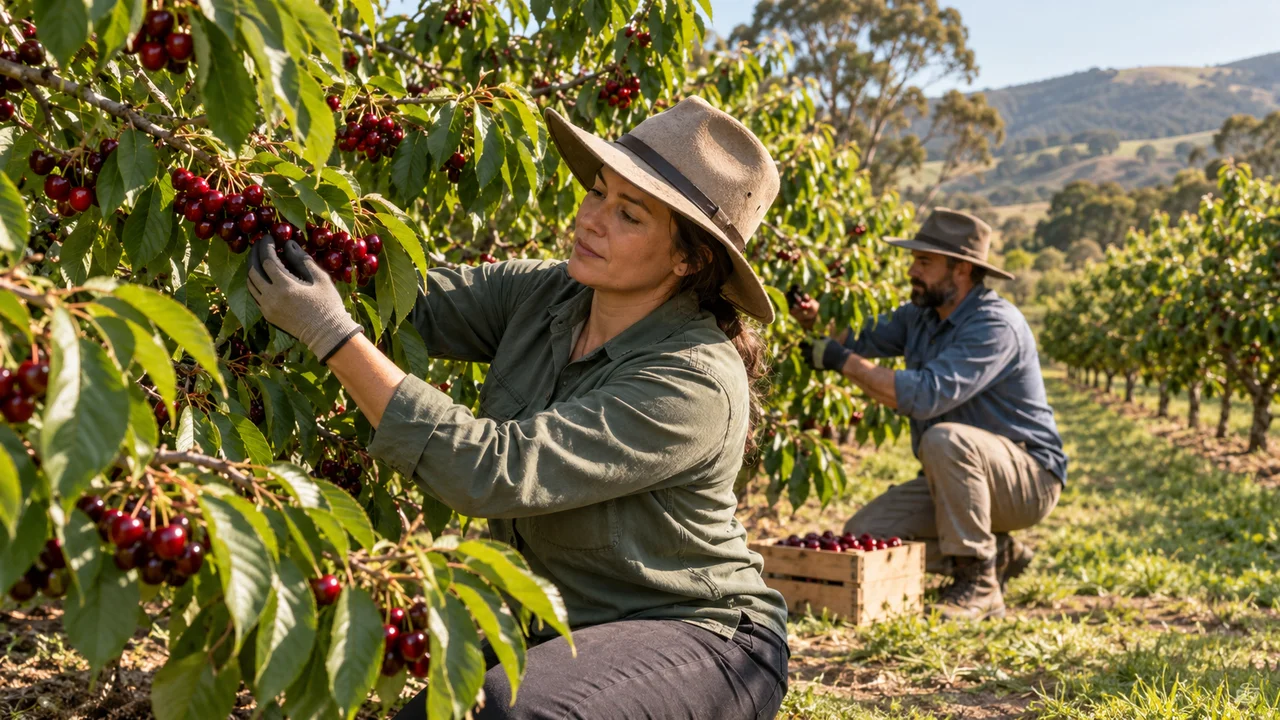
Cherry harvest is one of the clearest examples of why a seasonal-work plan needs a region, not just a crop name. Australia’s season moves across states and districts, and the timing still changes with variety and weather. In October, it makes sense to identify places you could reach, prepare a focused application and ask an employer what its own season needs. It does not mean that every orchard is hiring or that a broad season window guarantees a roster.
Use the season map as a starting point
Cherry Growers Australia says the New South Wales season starts around late October and can run to mid-January. Its Queensland industry page describes early fruit from mid-October in some places, with the main season late October to late December. In South Australia, early Riverland varieties can begin in mid-October while the main state season is generally mid-November to mid-January.
Victoria’s main season is generally mid-November to late January, with early and late districts extending the window. Tasmania follows later: the national industry body places its main production from mid-December through mid-February, with a January peak. These are useful planning windows, not a vacancy list. Rain, heat, variety, fruit maturity and a particular orchard’s harvest program can move the work.
Turn a broad window into a practical search
Choose one or two reachable regions rather than booking a long trip around a national calendar. Check the seasonal work calendar for broad context, then look for current, specific advertisements or make direct contact through an established business. A genuine conversation should be able to cover the legal employer, worksite, likely start date, task, employment type, pay arrangement and how the employer will tell workers when weather changes a shift.
Ask whether the work is picking, packing, sorting, orchard maintenance or a mix. Do not assume every task at a cherry property is eligible specified work or covered by the same employment arrangement. If accommodation or transport is mentioned, ask for the address, full price, any deductions, transport schedule and what happens if shifts are reduced. Avoid paying a fee merely to secure a job; Scamwatch warns that employment scammers may ask for money or personal information before a real position exists.
Check pay before the first day
Cherry picking, packing and sorting can fall under the Horticulture Award, but award coverage and classification depend on the actual role and employer. Fair Work’s horticulture guidance says that adult level 1 employees covered by the award have minimum hourly rates from 1 July 2026, and it directs workers to the Pay and Conditions Tool for the rate that applies to their circumstances. An agreement may also apply, so ask which instrument the employer uses rather than relying on a number copied from an old advertisement.
Piece rates are common in horticulture. Under the Horticulture Award, a pieceworker must receive a written piecework record before the work starts. Fair Work says the record identifies the task and rate, and that workers covered by the award have a daily minimum wage guarantee based on their applicable hourly rate and hours worked. A higher piece-rate result must be paid when it exceeds that guarantee. Keep your own record of start and finish times, task, units picked or packed, rate and pay date; it makes a first-payslip question much easier to resolve.
Arrive ready for outdoor work
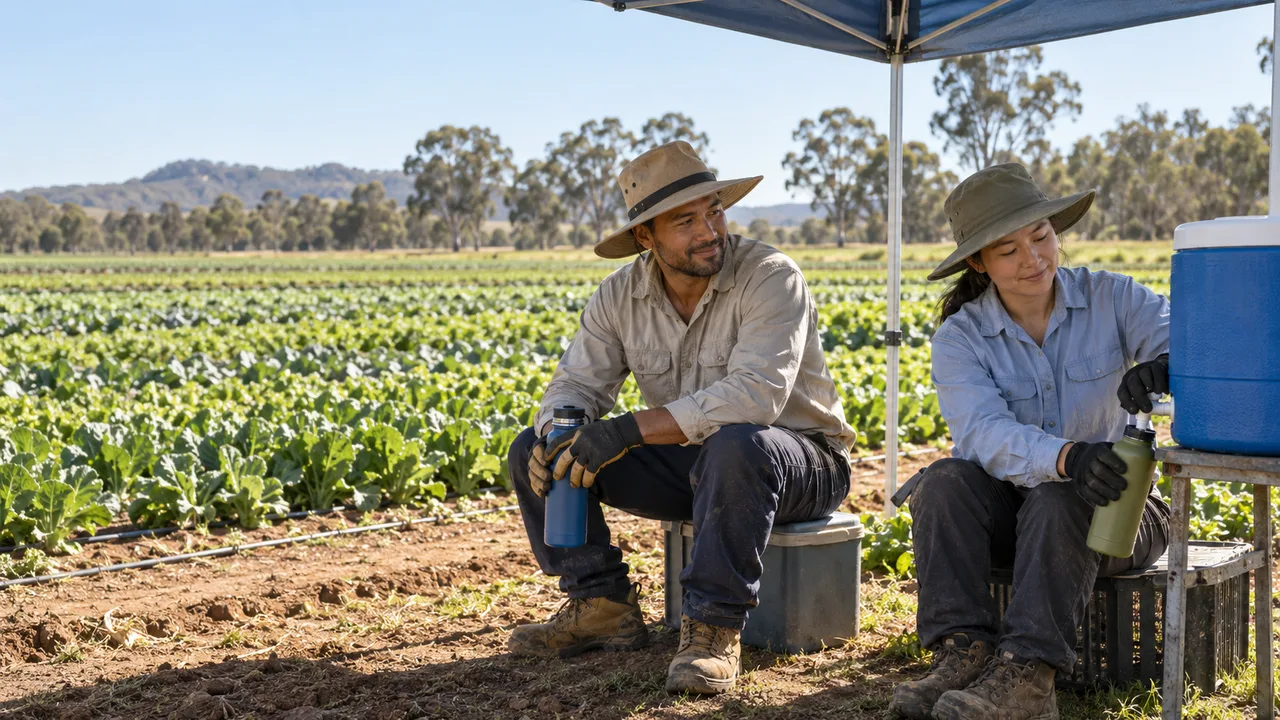
Before travelling, ask what induction, drinking water, shade or rest arrangements, sun protection and supervision are provided. Safe Work Australia notes that heat can harm people working indoors or outdoors and recommends managing the risk, including considering cooler times of day where practicable. Bring suitable clothing and follow the site’s instructions; do not use ladders, equipment or chemicals without the required training and direction.
Keep the written offer, roster, employer and worksite details, payslips and bank payments from day one. If you are a Working Holiday Maker and hope the job will count towards a later visa, check your own subclass’s specified-work rules, duties and location directly with Home Affairs before accepting it for that reason. Fruit harvesting and packing can be eligible plant and animal cultivation for some visa purposes, but the visa rules—not an ad or a crop calendar—decide it.
A simple pre-travel checklist
- Match your available dates to one specific region’s broad season.
- Get the employer, worksite, duties, start date and pay arrangement in writing.
- Confirm accommodation and transport costs before committing to travel.
- Save a daily record of hours, output and pay from the first shift.
- Use the pay and conditions guide, scam-check guide and 88 days guide for the detail behind those checks.
A cherry season can be a useful next move when the offer is real and the practical details stack up. Keep the plan flexible, verify the vacancy before you travel and let the employer’s confirmed schedule—not a seasonal headline—set your departure date.
Sources & last checked
- Cherry Growers Australia · growing regions and harvest seasons ↗
- Fair Work Ombudsman · working the harvest trail ↗
- Fair Work Ombudsman · piecework records ↗
- Safe Work Australia · working in heat ↗
- Scamwatch · jobs and employment scams ↗
- Home Affairs · specified work for subclass 417 ↗
- Home Affairs · specified work for subclass 462 ↗
Last checked: 10 October 2026. Visa rules, pay rates and recruitment dates can change; follow the linked official source for your circumstances.