Hot weather can change a seasonal shift long before the thermometer reaches a headline number. Physical effort, direct sun, humidity, clothing, airflow, how long you have been working and your own acclimatisation all affect heat risk. For a worker considering a harvest, field or outdoor packing role, the useful starting point is not a promise that work will always stop at one temperature. It is a clear plan for the actual site, task and forecast.
That matters in October as the Bureau of Meteorology’s heatwave service begins its usual October-to-March forecast and warning period. A crop window or a sunny forecast does not guarantee a shift. Ask the employer what happens when conditions change, and decide whether the travel, transport and accommodation arrangements still work if the roster moves.
Check the weather that matters to your shift
Before travelling, look at the Bureau’s local forecast and heatwave service for the actual work district, rather than a capital-city forecast. The service provides forecasts and warnings for heatwaves, while a local forecast helps you see likely temperature, wind and rain. Recheck after you arrive: a regional worksite can be much hotter, more exposed or more humid than the town where you are staying.
Heatwave maps are a planning tool, not an instruction to ignore the employer’s safety process or a guarantee that conditions will be identical at every farm. Tell the supervisor if you are new to hot outdoor work, have just arrived from a cooler climate or have a health concern that could affect heat tolerance. Safe Work Australia notes that no single stop-work temperature accounts for every factor that makes heat hazardous.
Turn the job offer into a heat plan
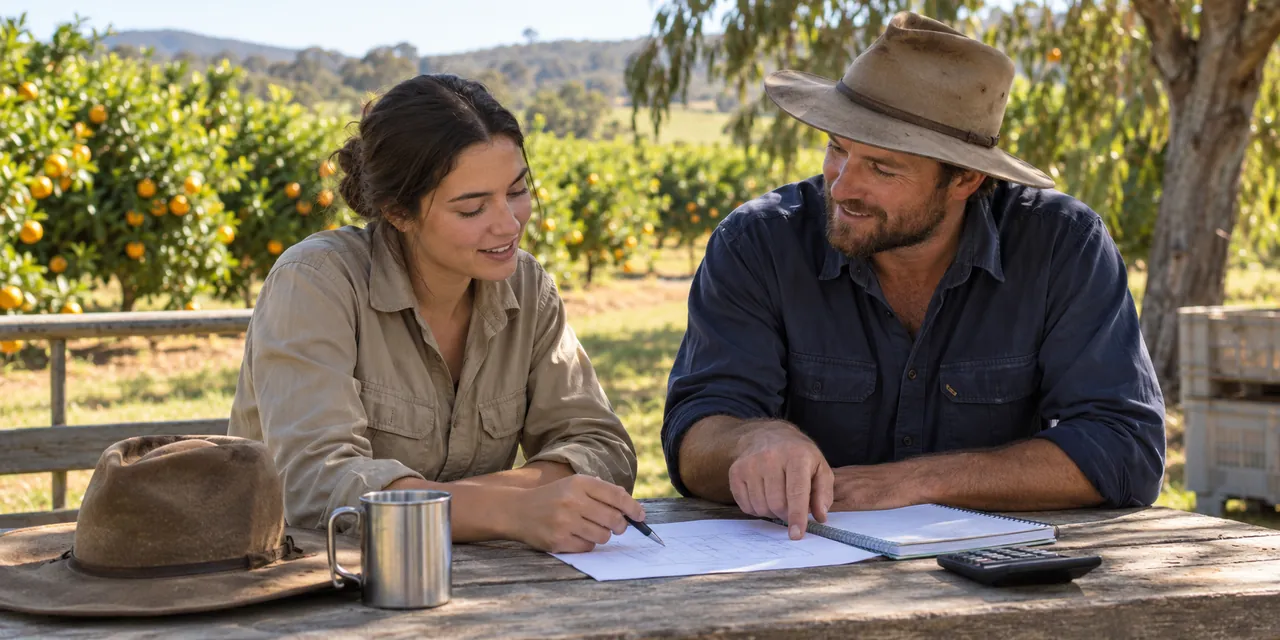
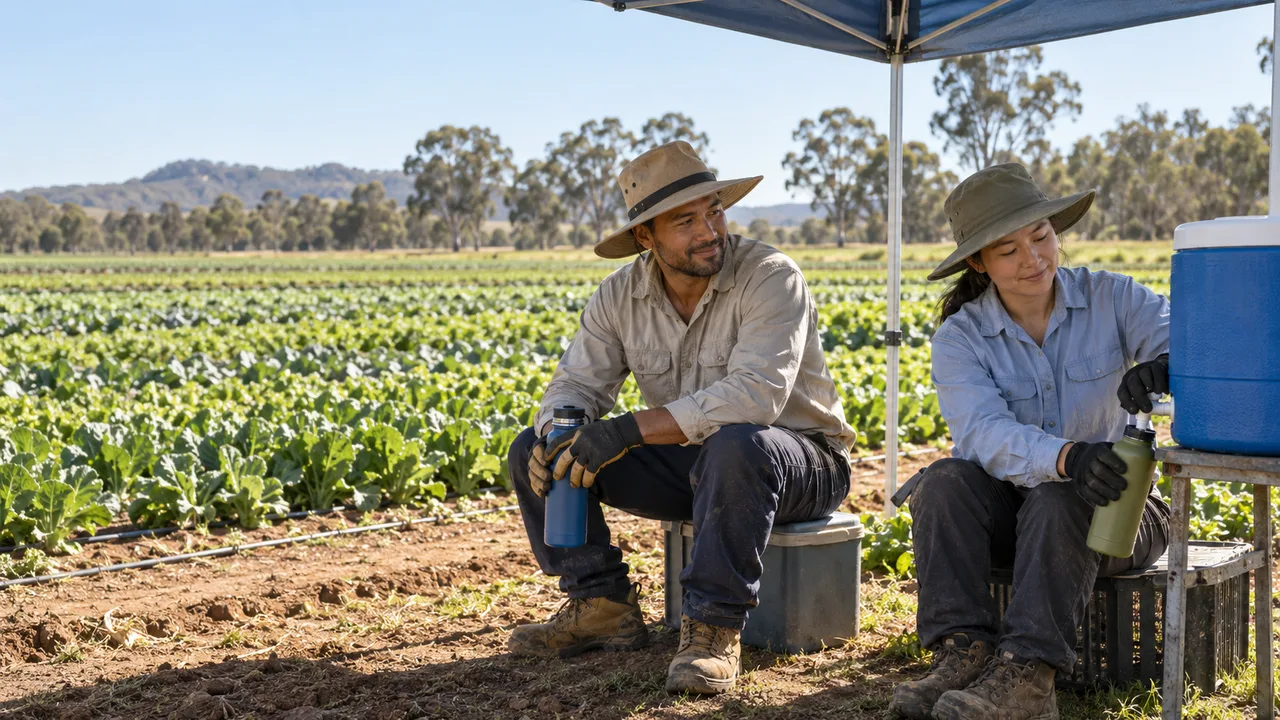
Ask practical questions before the first shift: Where is the shaded rest area? Is drinking water available at the worksite? How are breaks and task rotations adjusted when conditions worsen? Who checks in on workers, especially new starters or people working away from the main crew? How will a delayed or cancelled shift be communicated, and what transport is available if the day changes?
A credible answer should describe a system, not just tell workers to “drink water”. Safe Work Australia recommends planning controls around the work, including changing tasks or schedules, allowing workers to self-pace when heatwave work is necessary, and recognising symptoms early. SafeWork NSW also identifies shade, cooler work times, task rotation, water, instruction and supervision as controls for outdoor work. These are questions to raise respectfully with the supervisor; they are not a reason to improvise your own work method.
Know when to speak up
Heat-related illness can be progressive. Dizziness, nausea, muscle cramps, fainting, visual disturbance and unusual sweating are warning signs described in Safe Work Australia guidance. If you or a colleague shows symptoms, stop the task and tell the supervisor promptly so the site’s first-aid and emergency process can be used. Do not try to push through, work alone or use an energy drink as a substitute for a proper response. In an emergency, call 000.
Heat also affects concentration and coordination, which matters around vehicles, tools, uneven ground and repetitive work. Follow the induction, wear the sun-protective clothing and personal protective equipment specified for the site, and use shade and breaks as directed. The plan may change during the day as work intensity, humidity or the forecast changes.
Keep heat safety separate from your pay record
A changed roster does not remove the need for clear pay information. Before starting, get the legal employer, worksite address, employment type, award or agreement, classification, pay arrangement, pay day and any accommodation or transport deductions in writing. Fair Work says horticulture employees are usually covered by the Horticulture Award or Wine Award, but the role and employer determine the right instrument.
If a horticulture task is paid by piece rate, the Horticulture Award has specific rules. Fair Work says a pieceworker must receive a piecework record before starting, and the daily minimum wage guarantee applies to full-time, part-time and casual pieceworkers under that award. Keep your own daily note of start and finish times, breaks, task, output where relevant and the weather-related change to the shift. Compare it with your payslip and bank payment. A weather interruption can explain fewer hours; it does not make an unexplained deduction acceptable.
Pack and plan for a flexible first week
Bring what the employer requires, plus enough drinking water for the journey to the worksite. Confirm the pickup point, return transport and accommodation cost before a very early start. Keep a small buffer in your budget and schedule: heat, rain, crop readiness and safety controls can change the roster. Do not travel solely because a social post suggests a region is “desperate for workers”; confirm the real employer, start date and expected work in writing.
For Working Holiday and Work and Holiday visa holders, heat planning is separate from specified-work eligibility. Check the current Home Affairs rules for your own subclass, duties and location before relying on any role toward a later visa. A safe seasonal job is one where the offer is genuine, the pay terms are clear and the work system responds when conditions change.
A five-minute pre-shift check
- Check the local Bureau forecast and any heatwave warning for the work district.
- Ask where to find water, shade, breaks, first aid and the supervisor.
- Confirm the task, roster, pay arrangement and how weather changes are communicated.
- Tell the supervisor if you are new to heat or begin to feel unwell.
- Record your hours and compare every payslip with your own notes.
For the fuller employment checks, read the pay and conditions guide, first-week guide and seasonal job scam guide. Then let the confirmed job details and current conditions—not a broad summer prediction—determine your next move.
Sources & last checked
- Bureau of Meteorology · heatwave forecasts and warnings ↗
- Safe Work Australia · working in heat FAQs ↗
- SafeWork NSW · working in extreme heat ↗
- Fair Work Ombudsman · horticulture pay and piece rates ↗
- Home Affairs · specified work for subclass 417 ↗
- Home Affairs · specified work for subclass 462 ↗
Last checked: 14 October 2026. Visa rules, pay rates and recruitment dates can change; follow the linked official source for your circumstances.