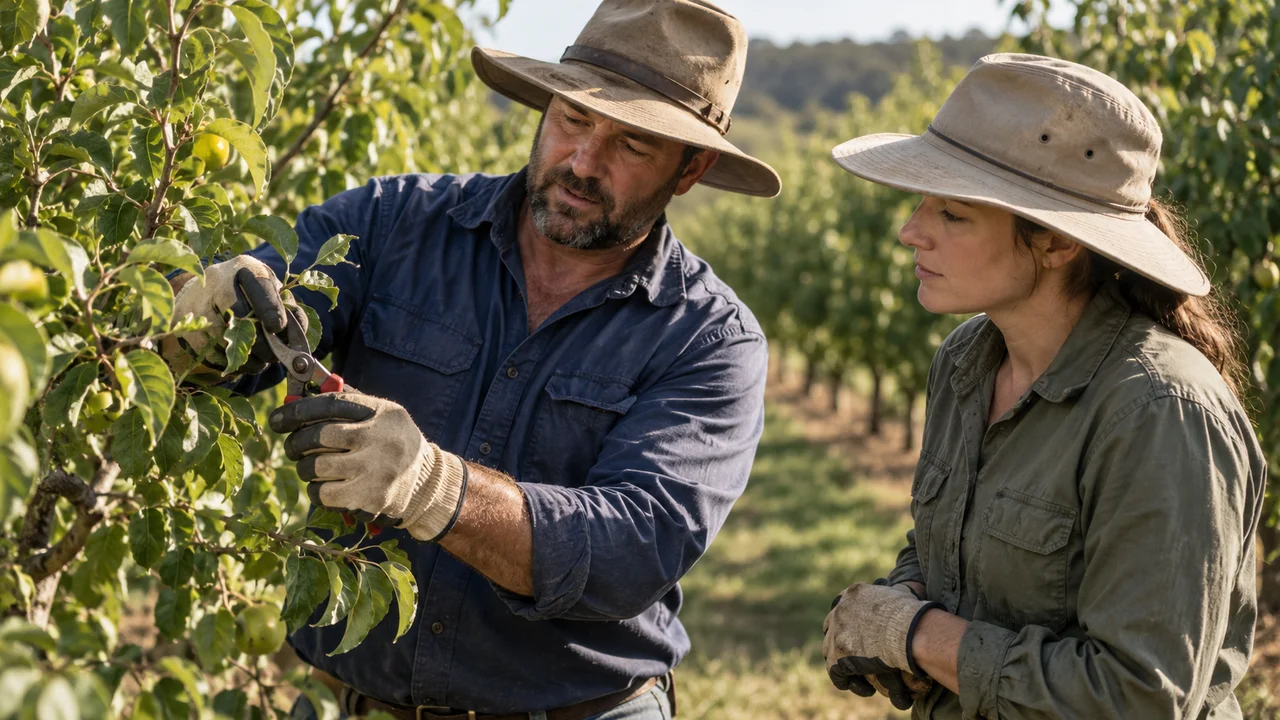
Before you set off
Get the employer name, supervisor contact, worksite address, start time and written pay terms. Confirm accommodation and transport independently. Ask which equipment the employer provides and which personal items to bring. Save the documents so you can access them when mobile coverage is poor.
Use a real vacancy and written confirmation to plan the journey. Harvest timing changes, so a calendar entry is not a start-date commitment. Do not pay someone for a guaranteed placement or visa outcome.
Day one: understand the task and safety arrangements
Ask for an induction covering the task, tools, machinery, manual handling, chemical exclusion areas, water, breaks, first aid and emergency contacts. Do not operate unfamiliar machinery or use equipment without the required training. Tell your supervisor if an instruction is unclear.
Outdoor work needs a plan for heat and sun exposure. Safe Work Australia recommends managing heat risks through the work environment, scheduling, hydration, rest and appropriate clothing, rather than relying on workers to simply tolerate the conditions. Ask how the employer changes work when conditions become unsafe.
Set up payroll and check the rate
Give payroll the details it needs through a verified channel. Ask about the award, classification, employment type, pay cycle and super arrangements. For piecework, obtain the signed piecework record before starting and learn how the employer records your output and hours.
The national Horticulture Award has a daily minimum-pay guarantee for pieceworkers. Keep your own record even when the employer uses a scanner or app, and compare it with the first payslip. Different awards can have different arrangements.
Sources: Fair Work · hourly pay, piece rates and the minimum wage guarantee · Fair Work · pay, entitlements and working conditions
Make the daily record a small habit
Write down the work date, location, duties, start and finish times, breaks and any output units. Keep the supervisor’s name and note interruptions or worksite changes. Save payslips and match them to bank payments.
If you are collecting specified work for a later visa, record the actual postcode and normal roster too. A calendar day, a shift and a counted visa day are not always the same thing. Review the Home Affairs examples before filling a tracker with assumptions.
Sources: Home Affairs · specified work for subclass 417 · Home Affairs · specified work for subclass 462
At the end of the first week
Check your expected roster, accommodation bill and transport for the next week. Compare pay with hours and written terms. Your employer must issue a payslip within one working day of payday. Ask payroll to explain missing hours, unexpected deductions or a piecework calculation that falls below the applicable guarantee.
Keep enough time and money to change plans if work or housing falls through. Good preparation is ordinary administration: clear contacts, written terms, safe work and records you can find later.
Sources: Fair Work · pay, entitlements and working conditions · Fair Work · deductions from pay · Fair Work · hourly pay, piece rates and the minimum wage guarantee
Common questions
What should I ask at induction?
Ask how the task is done safely, who supervises you, how heat and breaks are managed, and where first aid and emergency help are available.
When should I receive a payslip?
Within one working day of payday. Check it against your hours, output where relevant and written pay terms.
Sources & last checked
- Scamwatch · jobs and employment scams ↗
- Safe Work Australia · working in heat ↗
- Fair Work · hourly pay, piece rates and the minimum wage guarantee ↗
- Fair Work · pay, entitlements and working conditions ↗
- Home Affairs · specified work for subclass 417 ↗
- Home Affairs · specified work for subclass 462 ↗
- Fair Work · deductions from pay ↗
Last checked: 8 October 2026. Visa rules, pay rates and recruitment dates can change; follow the linked official source for your circumstances.