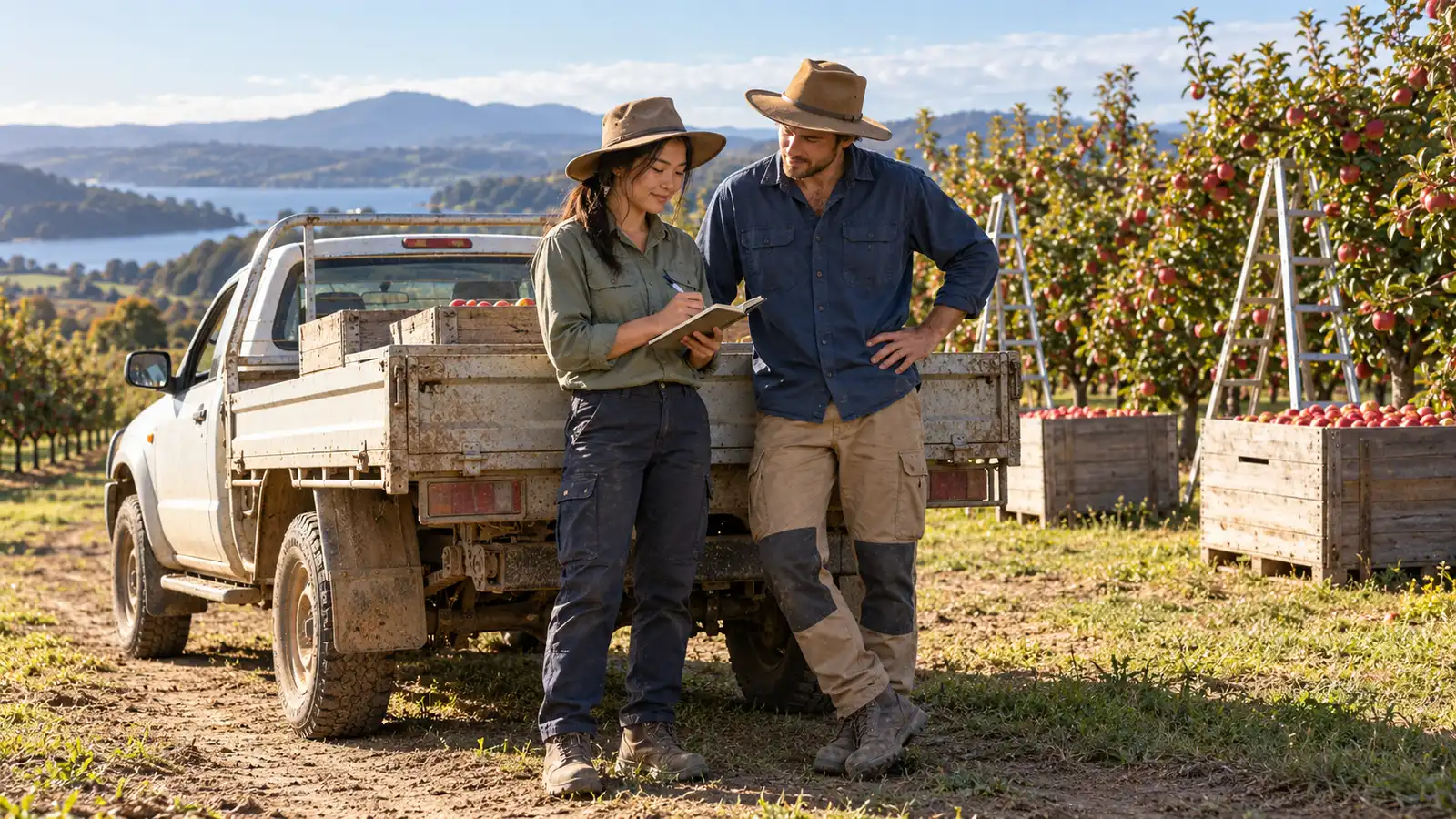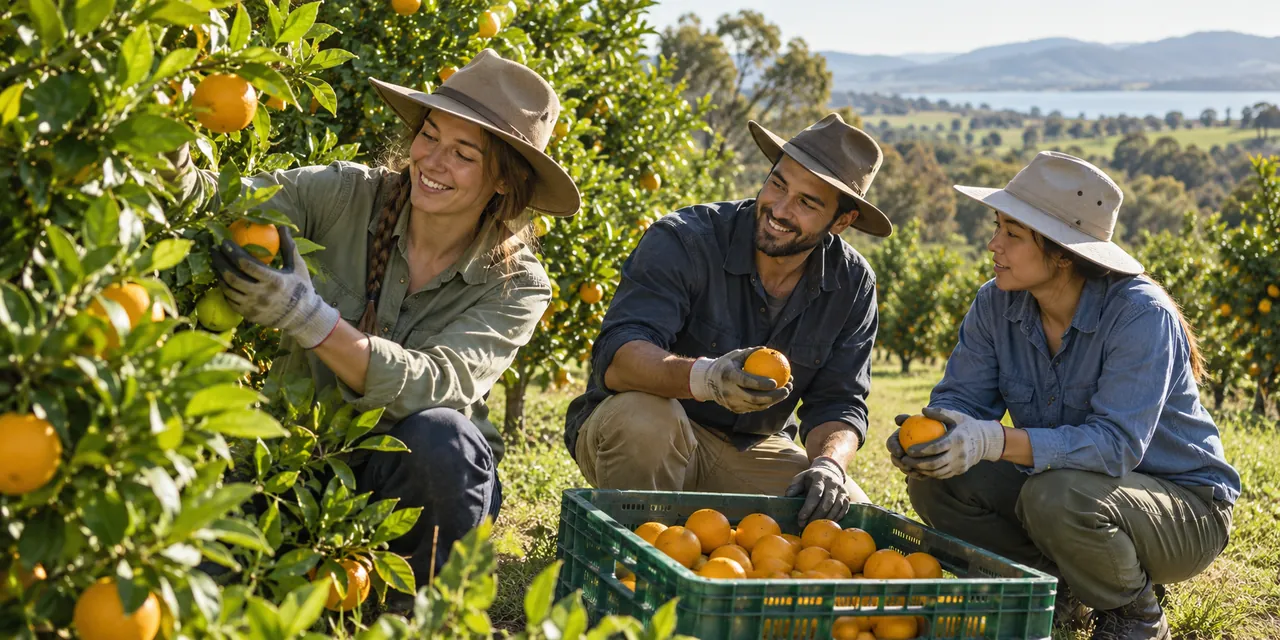
How to find farm work in Australia comes down to timing and checking, not luck. Set up your visa, money, tax file number and a short CV before the search gets busy, line your search up with the crops that are about to be picked, apply through job listings and direct approaches, and check every employer before you spend money travelling. This plan takes you from your first week of searching to the morning you drive out to the farm.
Where genuine farm jobs come from
Farm jobs reach workers in three main ways. Knowing all three gives you more than one way in when a season gets busy.
- Job listings. Growers, packing sheds and licensed labour hire providers advertise seasonal roles online, and Home Affairs notes that agriculture and harvest vacancies are found through the usual job channels. Our seasonal job listings cover harvest, packing sheds, farm hands, vineyards, nurseries and more, searchable by state and type of work.
- Direct approaches. A polite call or message to a farm, packing shed or vineyard before its season starts can put your name on a list before an ad goes up. Keep it short: who you are, your visa, when you are free and how to reach you.
- Word of mouth. Other workers in your hostel, caravan park or last job often hear first when a crew needs people. Treat these tips like any ad: you still check the business before you agree to anything.
Time your search against the harvest calendar
The biggest reason people sit in a hostel for weeks is arriving in a region as a crop is finishing, or long before it starts. Search for the next crop, not the one you can see on the trees today.
Our Australian seasonal work calendar shows typical harvest, vineyard, ski and tourism windows by month and state. They are typical seasons, not a forecast of this year's crop, so weather can move them. The Tasmanian Department of Natural Resources and Environment says Tasmania has harvest jobs available for nearly 12 months of the year: strawberries October to May, cherries December to February, blueberries and raspberries December to May, and apples February to May. In the Northern Territory, mangoes around Darwin and Katherine are usually picked between September and December.
If you want to string several crops together, our guide to chaining fruit picking seasons into a working year shows how one season can lead into the next.
Your farm job search plan at a glance
| When | What to do | Why it matters |
|---|---|---|
| Before you book travel | Wait for your visa grant and save enough to support yourself | Home Affairs recommends no travel or work commitments until the visa is granted |
| Before you arrive | Write a one-page CV and a short message you can adapt | You can reply to a listing within minutes of seeing it |
| First days in Australia | Apply for a tax file number and open a bank account | Employers need both to pay you properly |
| A few weeks before a crop | Apply to listings and contact farms in that region | Crews are often filled before picking starts |
| After an offer, before you travel | Check the ABN, any labour hire licence and the pay terms | It protects your money and your specified work |
Before you arrive: get the basics ready
Home Affairs recommends waiting until your visa is granted before booking flights or making travel, work or study commitments. Its working holiday news page says Working Holiday Maker numbers are at a record level and that average processing is expected to be around three months, so build that into your plan rather than booking around a hoped-for date.
Money is part of the search. For a first Working Holiday (417) visa, Home Affairs says you usually need about AUD5,000 for your initial stay plus the fare onwards.
Your CV can be ready before you leave home. Farm employers want to see reliability, any outdoor or physical work, a driver licence if you have one and the dates you can work. Build AI CV can help you put together a short one-page CV on your phone, which is all most harvest roles need. If you have never worked on a farm, our guide to farm work with no experience shows what to highlight instead.
After you land: the first steps of your search
- Apply for your tax file number. The ATO says you can apply online once you have your work visa. A TFN is not compulsory, but without one you pay more tax. Applying is free and the number should arrive within 28 days.
- Open a bank account. Moneysmart says you can go to a bank branch, ask for an everyday account with no fees and show proof of identity such as your passport. Wages are usually paid into your account.
- Pick two or three target regions. Choose regions where a crop is about to start, and check that the postcodes count if you need specified work.
- Apply every day for a set period. Reply to fresh listings quickly, and send direct messages to farms in your target regions.
- Keep a simple tracker. Note each business, its ABN, what they offered and when you followed up.
If you are counting days for a second visa, the search has a deadline. Home Affairs advises not leaving specified work until the end of your stay, to allow for bad weather, illness or not finding enough work. Our second year visa planning guide explains how the 88 calendar days are counted and how to time them.
The application and the phone call
What to send
Send a few lines that answer the grower's real questions: your name, visa type, the date you can start, how long you can stay, whether you have a car and any similar work. For example: "Hi, I'm [your name], on a 417 visa, available from [date] for the whole [crop] season. I have my own car and some packing shed experience. CV attached."
Some workers also send a short video introduction, which lets a grower hear your English and see that you are ready to work. SelfIntroVideo helps job seekers plan and record a short self-introduction with a script and a teleprompter. For a wider check before you hit send, JobFinder's job application checklist covers file names and fake ads.
What to ask on the call
The call is your chance to check the job too. Ask:
- What is the business name and ABN, and are you the employer or a labour hire provider?
- Is the work paid hourly, by piece rate or both, and will I get a written piecework record before piecework starts?
- What is the start date, and what happens if weather delays it?
- Is accommodation offered, what does it cost, and is any money taken out of my pay?
- Is this work in a postcode and industry that counts as specified work for my visa?
Our post on questions to ask before your first farm job goes further, and the guide to ground, bush, tree and vine picking jobs helps you say which kind of work suits you.
Be careful with trials. Fair Work says an unpaid work trial may be unlawful if it lasts longer than needed to show your skills (from an hour to one shift, depending on the work), goes beyond a skills demonstration, or is not directly supervised.
Checks before you travel to a farm
A job that needs a long bus trip deserves a few minutes of checking first. Fair Work's advice for working the harvest trail lists the warning signs: offers that need upfront fees or include "free" accommodation, ads with only a phone number or post office box, jobs picking the wrong seasonal fruit, and offers that promise a quick visa or sponsored employment.
- Check the ABN. Fair Work advises asking for the business name and ABN and checking it on the Australian Business Register.
- Check the labour hire licence. In Queensland, a contractor who supplies pickers to a farmer is a labour hire provider and must be licensed. In Victoria, if a contractor employs you to pick, pack or plant fruit or vegetables, you are probably a labour hire worker and your employer must hold a licence.
- Never pay to get the job. Employers can't ask job applicants to pay money to receive a job offer. Fair Work also says to be wary of paying upfront for accommodation before you have found a job.
- Know the pay floor. From 1 July 2026, the Horticulture Award minimum for an adult level 1 picker, sorter or packer is $25.74 an hour for full-time and part-time employees and $32.18 for casuals. Our piecework pay guide explains how piece rates work.
What changed in 2026 for labour hire
From 29 January 2026, South Australia's labour hire licensing covers labour hire firms and workers in all industries, and providers in the newly added industries had until 29 July 2026 to become licensed. In Victoria, from 1 October 2026, the definition of labour hire focuses on whether labour supply is involved, so a licence is needed to supply labour anywhere in a supply chain. If a contractor offers you farm work in either state, check the register before you go. Victorian workers can report problems to the Labour Hire Authority on 1300 545 200.
Common mistakes when looking for farm work
- Chasing the crop you can see. By the time a harvest is in full swing, many crews are already full. Search for the next crop instead.
- Paying a "bond" to start. In Fair Work's example, a farm that wants an accommodation bond before you start and can't be found on the Australian Business Register is likely a scam, and requiring payment before starting work is illegal even for a real job.
- Skipping the postcode check. A job in the wrong postcode or industry will not count as specified work, however hard you work.
- Not keeping records. Pay slips and your own hours record protect your pay and your visa plans. Our post on the records to keep for 88 days lists them.
Rules, pay rates and visa conditions can change. Check the official government website before you act.
Frequently asked questions
How do backpackers find farm work in Australia?
Most backpackers combine job listings, direct messages to farms and packing sheds before a season starts, and tips from other workers. Whatever the lead, check the business name, ABN and pay terms before you travel.
When should I start looking for a harvest job?
Start a few weeks before the crop you want begins, not when it is already in full swing. Use a harvest calendar to see typical windows by state, and remember that weather can move them.
Can I find farm work before I arrive in Australia?
You can prepare your CV, research regions and contact farms in advance, but Home Affairs recommends waiting for your visa grant before making travel or work commitments.
Should I pay someone to find me a farm job?
No. Employers can't ask job applicants to pay money to receive a job offer, and Fair Work lists upfront fees as a warning sign. Scamwatch says not to pay for a job by bank transfer, PayID or cryptocurrency.
Does every farm job count towards my 88 days?
No. Specified work has to be in an approved industry and postcode for your visa, and it must be paid lawfully. Check the Home Affairs specified work page before you accept a job you are counting on.
Key takeaways
- Get your visa grant, savings, CV, tax file number and bank account sorted before the search gets busy.
- Search for the next crop in a region, a few weeks ahead, using a harvest calendar.
- Use job listings, direct approaches and word of mouth together.
- Check the ABN, any labour hire licence and the pay terms before you travel.
- Never pay to get a farm job, and keep records from your first shift.