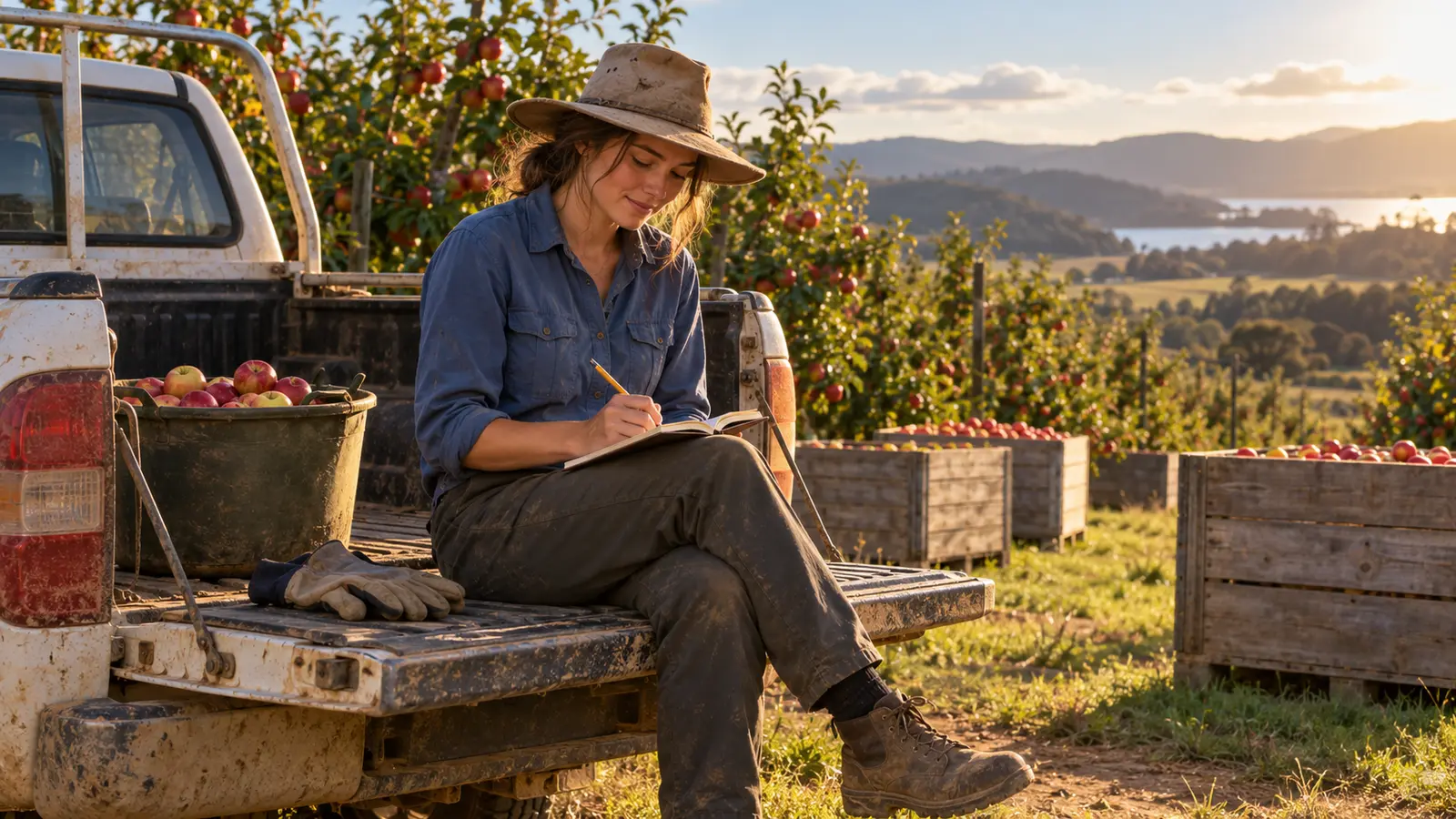
To apply for a second year visa in Australia on a Working Holiday (417) or Work and Holiday (462) visa, most people need 3 months of specified work, which Home Affairs counts as 88 calendar days, done while holding the first visa, in an approved industry and postcode, and paid correctly. Treat it as a plan from your first week: start early, keep proof as you go, leave a buffer for bad weather, then lodge.
What a second year visa actually asks of you
There is no automatic second year. It is a new application with its own charge and decision; your work only makes you eligible to apply.
For a second Working Holiday (subclass 417) visa, Home Affairs lists four things: you previously entered Australia on a 417 visa, you did 3 months of specified 417 work, you are 18 to 30 years old (or 35 for some countries), and, if you are in Australia, you hold a substantive visa or your last one expired less than 28 days ago. For the 462, doing 3 months of specified 462 work makes you eligible to apply for a second Work and Holiday visa.
Specified work means work in a "specified" industry and area of Australia. Home Affairs takes 3 months as a minimum of 88 calendar days, including weekends or equivalent rest days, and you must complete the same number of normal work days or shifts that a full-time employee in that role would work in that time. Our 88 days and specified work guide covers the counting rules.
UK passport holders are the main exception. If you lodge on or after 1 July 2024 using a passport issued by the United Kingdom, you do not need to meet the specified 417 work requirement for a second or third visa.
Your second year visa timeline, from week one
Home Affairs advises not leaving specified work until the end of your stay, to allow for bad weather, illness or not finding enough work. Unpaid days lost to weather do not count, and there is no exception for falling short for any reason.
Still looking for the farm job that starts your count? Our farm work search plan covers where real jobs come from, what to send and the checks to make before you travel.
| Stage | Roughly when | What to do |
|---|---|---|
| Set up | Weeks 1-2 | Tax file number, a notebook or app for hours, check which postcodes and industries count for your visa |
| First specified job | Months 1-3 | Start regional farm, packing or other approved work while you still have most of your visa left |
| Build the 88 days | Months 2-7 | Work full-time equivalent days, collect a pay slip for every pay, note every unpaid gap |
| Buffer | About a month spare | Cover rain days, a crop ending early or a week off sick without pay |
| Lodge | Once the days are done | Gather evidence, check the official page again, lodge and wait for the grant before booking anything |
Weeks 1-2: set up before the first shift
Once you have your work visa, you can apply online for a tax file number. It is not compulsory, but without one you pay more tax. When you start a job, tell the employer you hold a 417 or 462 visa and give them a Tax file number declaration.
Check the rules for your own visa now: the 417 and 462 industry lists differ, and postcodes decide whether a farm counts. Read the Working Holiday 417 guide or the Work and Holiday 462 guide, whichever matches your visa.
Months 1-3: get into specified work early
Plant and animal cultivation, which means harvesting and packing fruit and vegetables and the immediate processing of animal products such as shearing, is the work most people use. Pruning vines and trees for commercial horticulture can count when it is the main task. General garden maintenance does not, and secondary processing such as winemaking does not either.
Location matters as much as the job. All postcodes in South Australia, Tasmania, the Northern Territory and Norfolk Island are regional Australia for specified work, which makes those places simple to plan around. Tasmania says it has harvest jobs for nearly 12 months of the year. To line up one crop after another, use our seasonal work calendar and our post on chaining two or three crops into a working year.
A short CV listing any outdoor or physical work makes farm applications quicker; Build AI CV can help you write one on your phone.
Months 2-7: build the days and the proof together
Home Affairs says you can meet the requirement by working 5 days a week for 3 calendar months, by working fewer days a week over a longer period, or by several short periods of full-time, part-time or piecework that add up to the same. It can be split across employers, but not squeezed into less than 3 calendar months.
Every day of specified work must be paid in line with Australian law and the relevant award. Before piecework starts you should get a written piecework record; our guide to piecework pay before you pick explains what it must show.
Collect proof as you go. A pay slip must show the employer's name and ABN (if any), the pay period, gross and net pay, the hours and rate, and the super paid. Fair Work's free Record My Hours app lets you keep your own record of hours, places and type of work, and you can also keep a private work log on Seasonal Jobs Australia (a record for you, not a visa decision). Our post on the records to keep from day one has a full checklist.
Moving from farm to farm? A profile on Talent Tabloid lets you show verified work history to the next employer.
Leave a buffer of about a month
Weather is the most common reason a plan slips. Unpaid days when you did not work because of severe or seasonal weather do not count, and public holidays and sick days count only if you were paid for them. Starting in your first three months leaves room to make up lost days at a second farm.
When the days are done: lodge, then wait
If you are in Australia on your first 417 visa when you get your second, Home Affairs says you can stay on the second visa for up to 12 months from the date the first one expired or would have expired. So once you are eligible, there is little reason to wait.
How to lodge your second year visa application
- Count your days against the official rules: calendar days, full-time equivalent shifts, one day of credit per calendar day at most.
- Check your postcodes and industry once more on the Home Affairs specified work page for your visa (417 or 462).
- Put your evidence in order: pay slips, your hours record and each employer's name, ABN and work address.
- Check the age rule and the visa charge. The base application charge for a second or third 417 visa is AUD1,000.00, and the same for a second or third 462 visa; the Visa Pricing Estimator gives the charge on the day.
- Lodge, and remember you must be in Australia at grant if you applied in Australia, or outside if you applied outside.
- Wait for the grant before booking flights or making travel, work or study commitments. Home Affairs expects average processing for most working holiday applications to be around three months.
417 and 462: the differences in brief
The two visas follow the same day-count rules, but the work that counts is not identical. Check the specified work page for the 417 or the specified work page for the 462 before you accept a job.
| Point | Working Holiday (417) | Work and Holiday (462) |
|---|---|---|
| Farm work in regional postcodes | Plant and animal cultivation counts | Plant and animal cultivation counts |
| Fishing, pearling, tree farming | Regional Australia | Northern Australia only |
| Mining | Regional Australia | Not listed as specified work |
| Tourism and hospitality | Northern or Remote and Very Remote Australia | Northern or Remote and Very Remote Australia |
| Base charge, second or third visa | AUD1,000.00 | AUD1,000.00, and no caps on second or third visas |
The regional postcode list is the same for both visas, but for a 462 those postcodes count only for plant and animal cultivation and construction. Every Northern Territory postcode is in Northern Australia.
Thinking about a third year? Plan it during your second
A third visa needs 6 months of specified work, which Home Affairs takes as at least 179 calendar days. For the 417, you also need to have held 2 subclass 417 visas. As a rule, the work for a third visa must be done while holding your second visa, and the work for a second visa while holding your first, with limited exceptions such as some bridging visa periods.
Condition 8547 normally limits you to 6 months with one employer, but since 1 January 2024 plant and animal cultivation anywhere in Australia is exempt until the Government decides otherwise, and the 6 months restart with a new visa grant.
Common mistakes with the second year visa
- Starting too late. The last few months leave no room for rain, illness or a short season.
- Counting long days twice. Ten hours on one calendar day is still one day of specified work, even across two shifts or two employers.
- Counting unpaid days. Unpaid public holidays, unpaid sick days and unpaid weather days do not count.
- Wrong job or wrong postcode. Garden maintenance, winemaking and work outside the listed postcodes do not count, and the 462 list is narrower than the 417 list.
- Cash jobs with no pay slip. Specified work must be paid lawfully. Underpaid or unrecorded work puts your pay and your application at risk.
- Booking flights before the grant. Wait for the grant, and be in the right place when it is decided.
Rules, pay rates and visa conditions can change. Check the official government website before you act.
Frequently asked questions
How many days do I need for a second year visa in Australia?
Home Affairs takes the 3 months of specified work as a minimum of 88 calendar days, including weekends or equivalent rest days. You also need the normal days or shifts a full-time worker in that role would do.
Can I count work from different farms towards my 88 days?
Yes. Home Affairs says specified work can be split across employers and short periods, as long as the total is not completed in less than 3 calendar months.
Is the second year visa 462 process the same as the 417?
The day-count rules are the same, but the industries are not. For a 462, fishing, pearling and tree farming count only in Northern Australia, and regional postcodes count only for farm and construction work.
Do UK citizens need to do farm work for a second year visa?
No, not if they lodge on or after 1 July 2024 using a passport issued by the United Kingdom. Home Affairs says those applicants do not need to meet the specified 417 work requirement for a second or third visa.
Can work from my first year count towards a third year visa?
As a rule, no. Specified work for a third visa must be done while holding the second visa, with limited exceptions such as some bridging visa periods, and the third visa needs at least 179 calendar days.
Key takeaways
- A second year visa in Australia is a new application: 88 calendar days of specified work make you eligible to apply.
- Start specified work in your first three months and leave about a month spare for weather and illness.
- Check the industry and postcode rules for your own visa: the 462 list is narrower than the 417 list.
- Keep pay slips and your own hours record from the first shift.
- Wait for the grant before booking travel, and plan any third year during your second visa.