Backpacker farm work in Australia goes best when the trip around the job is planned before the job itself. Sort four things before you head regional: enough money to carry you through slow weeks, a way to get from your bed to the paddock every morning, somewhere to stay that you chose yourself, and your bank account, tax file number and documents ready for payday. Get those right and a wet week or a bad offer will not end your season.
Start with the visa and the calendar, then book travel
Home Affairs recommends waiting until your visa is granted before booking flights or making travel, work or study commitments. Its working holiday news page says it is normalising processing for most Working Holiday Maker applications, with an average processing time expected to be around three months, so build that wait into your plan rather than buying a non-refundable fare.
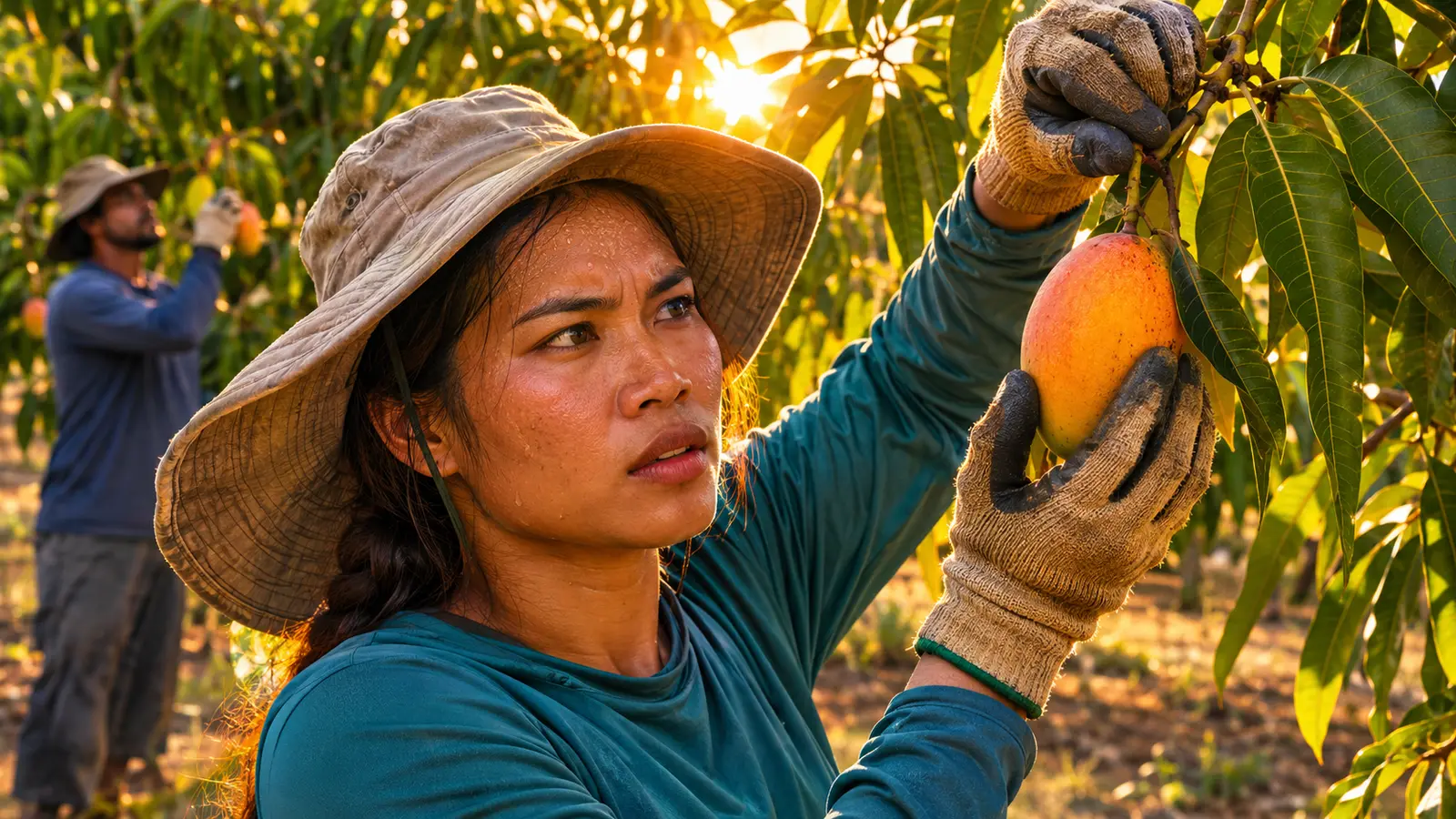
Next, pick a region by crop timing. Our seasonal work calendar by month and state shows typical windows. Tasmania's agriculture department says the state has harvest jobs available for nearly 12 months of the year, with cherries typically December to February and strawberries October to May, while Northern Territory mangoes are usually harvested between September and December.
Money: the savings buffer that keeps you choosy
For a first Working Holiday (417) visa, Home Affairs says you must have enough money to support yourself and leave Australia, usually about AUD5,000 for the initial stay plus the fare onwards. Treat that as the floor, not the budget.
Seasonal income starts slowly: you may wait days for a start, and rain can stop picking. Home Affairs advises not leaving specified work until the end of your stay, to allow for bad weather, illness or not finding enough work. A buffer is what lets you walk away from a dodgy offer instead of taking it because the money has run out.
What the money has to cover
- Getting to the region: a bus, flight, fuel or your share of a carpool.
- The first two to four weeks of rent, plus any bond or deposit.
- Food, phone credit and work gear.
- A car, if you buy one, with registration and repairs set aside.
- Health insurance: Home Affairs strongly recommends it, because Working Holiday visa holders are personally liable for all their healthcare costs in Australia.
What a working week can bring in
Plan income from the award, not from what someone says a "good picker" earns. From 1 July 2026, the Horticulture Award minimum hourly rate for an adult level 1 casual picking, sorting or packing fruit and vegetables is $32.18. On piece rates, Fair Work's minimum wage guarantee example says a level 1 casual working 7.6 hours must get at least $244.57 for the day, so five full days come to at least $1,222.85 before tax. Short and rained-off days cut that number.
Not sure how your pay will be worked out? Our 10-minute payday check for farm work shows how to compare your payslip with your own records.
Bank account, tax file number and super before payday
Open an everyday account early. Moneysmart says a new arrival can go to a bank branch, ask for an everyday (transaction) account with no fees, and show proof of identity such as a passport or driving licence. Wages are usually paid into it.
Apply for your tax file number online once you have your work visa: the ATO says it is free and should arrive within 28 days. A TFN is not compulsory, but without one you pay more tax. On your first day, give the employer a Tax file number declaration and tell them you hold a 417 or 462 visa.
Ask whether the business is registered with the ATO as an employer of working holiday makers. The ATO's working holiday maker page explains why it matters: a registered employer withholds 15% on the first $45,000, while an unregistered one must use foreign resident rates starting at 30%. In the ATO's example, $300 is withheld from a $1,000 pay instead of $150.
Super is paid on top of your wage. The super guarantee rate is 12.00% from 1 July 2026, and under Payday Super your fund must receive it within 7 business days after payday. You can only claim a departing Australia superannuation payment after leaving Australia, though the ATO recommends starting the application before you go.
Transport: car, carpool or a base you can walk from
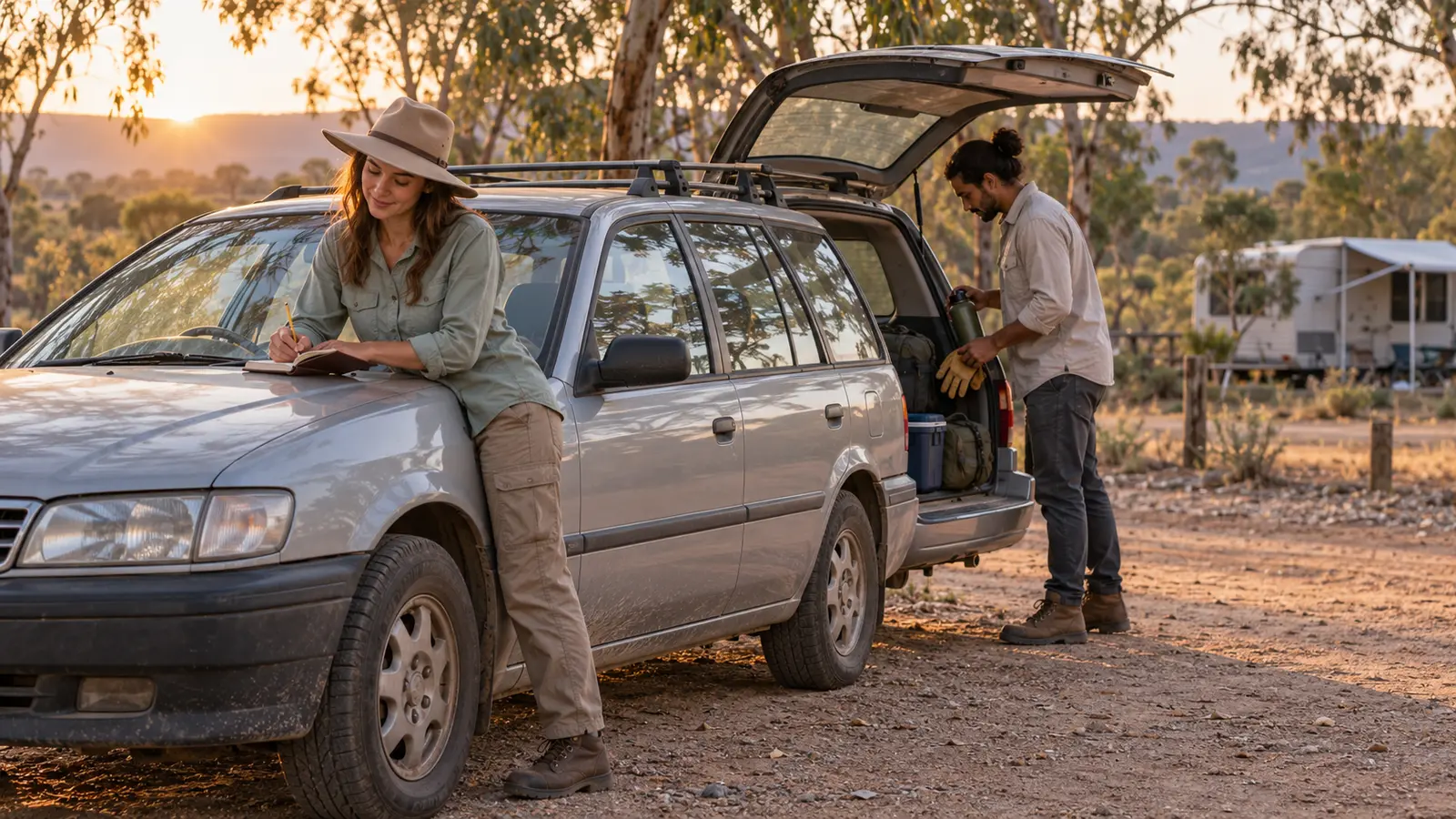
Farms are rarely on a bus route. Decide how you will reach work every morning, not just on day one.
- Your own car gives you the most choice of farms and lets you move when a crop ends, but it is the biggest cost in the budget.
- A carpool with co-workers works when your shifts match. Agree how fuel is shared, and have a backup.
- Employer transport: Fair Work says you must be paid in money, not in goods or services like transport or board, so any transport cost taken from your pay must follow the deduction rules.
- A base close to the work in the farm town cuts transport worries once you have a confirmed job.
Our accommodation and transport guide covers the questions to ask before you pay.
Once you have a bed, check what comes out of your wages for it: our guide to accommodation deducted from pay shows what an employer can and cannot deduct.
Somewhere to stay: your choice, your conditions
Fair Work says workers have the right to choose where they live and can find their own accommodation, such as a share house, motel, caravan park or backpacker hostel, even when an employer offers accommodation with a job. Its tips for working the harvest trail also say you may be asked for a deposit or bond, but to be wary of paying upfront for accommodation before you have found a job.
| Option | Suits | Ask before you pay |
|---|---|---|
| Backpacker hostel in a farm town | Arriving without a job and meeting other workers | Is work promised with the bed? If so, which business employs you, and what is its ABN? |
| Share house or room | A confirmed job for a full season | Is there a written agreement, and where is the bond lodged? |
| Caravan park or your own van | Workers with a vehicle who move between crops | What do sites cost by the week, and how far is the drive to work? |
| Accommodation offered by the employer | Remote farms with no town close by | Will rent come out of your pay, and will that be agreed in writing first? |
If you rent a room under a tenancy, bond limits apply in some states: in New South Wales and Queensland a bond generally cannot be more than 4 weeks rent, and in Queensland the owner or property manager must give you a receipt and lodge it with the Residential Tenancies Authority within 10 days.
Be careful with rent taken from wages. In Fair Work's example, a farm owner who deducts a worker's rent from wages under a verbal agreement acts unlawfully, because there is no written agreement and it is not mainly for the worker's benefit.
Your seasonal work trip plan, step by step
- Wait for your visa grant, then check your visa conditions in VEVO or the myVEVO app.
- Choose two or three regions whose typical crop windows match your arrival month.
- Set your savings buffer: the Home Affairs funds amount plus car, bond and insurance costs.
- Open a bank account and apply for your tax file number in your first days in Australia.
- Prepare a short CV and start applying before you travel regional, using our farm work search plan.
- Decide on transport and accommodation for the first job, and keep a backup for each.
- Before you accept, ask for the business name and ABN and check it on the Australian Business Register.
- From day one, keep your own record of dates, hours, pieces and pay slips.
A tidy one-page CV listing outdoor, physical or hospitality work speeds up every application, and Build AI CV can help you write one on your phone. SelfIntroVideo helps you record a short self-introduction to send with it.
For day-one records, Fair Work's free Record My Hours app lets you log your hours, where you worked and the type of work. Our post on the records to keep from day one explains what else to save for your 88 days, and our first week guide covers induction and payday.
Common mistakes on a first farm work trip
- Booking flights before the visa is granted.
- Arriving with only the minimum savings and taking the first offer because money is running out.
- Paying an accommodation bond before a job exists. Fair Work's example of a "farm" that wants a bond before you start and cannot be found on the Australian Business Register is likely a scam, and it is illegal to require payment before starting even for a real job.
- Accepting a lift and a bed from someone who meets you at a regional airport or bus depot. Fair Work warns these offers might be a scam to get your money.
- Leaving the 88 days to the last months of the visa, with no room for rain or illness.
Our guide to farm work scams in Australia lists the other red flags to watch for. If something goes wrong at work, call the Translating and Interpreting Service on 131 450 and ask for the Fair Work Ombudsman on 13 13 94.
Rules, pay rates and visa conditions can change. Check the official government website before you act.
Frequently asked questions
How much money should I have before starting backpacker farm work in Australia?
For a first Working Holiday (417) visa, Home Affairs says you usually need about AUD5,000 for your initial stay plus the fare onwards. Plan for more if you will buy a car or pay a bond.
Can a farm make me live in its accommodation?
No. Fair Work says you have the right to choose where you live, even when an employer offers accommodation with the job. You can stay in a share house, motel, caravan park or backpacker hostel instead.
Can my employer take rent or transport costs out of my pay?
Only if the deduction rules are followed: you agree in writing and it is mainly for your benefit, or a law, the award or a registered agreement allows it. Your written agreement must state the amount, reason, date and recipient, and you can withdraw it in writing at any time.
Do I need a tax file number before my first farm job?
It is not compulsory, but without one you pay more tax. You can apply online once you have your work visa, and the ATO says the TFN should arrive within 28 days, so apply in your first days in Australia.
Do unpaid days lost to rain count towards my 88 days?
No. Home Affairs says unpaid days when you did not work because of severe or seasonal weather do not count, and it makes no exception for weather. Keep enough money and time in your plan to cover those days.
Key takeaways
- Book travel only after your visa is granted, and pick regions by crop timing.
- Carry more than the Home Affairs funds amount: slow starts and wet weeks are normal.
- Open a bank account and apply for a TFN as soon as you arrive.
- Know how you will reach work every day before you choose where to stay.
- You choose where you live, and nothing comes out of your pay without your written agreement.