A harvest trail route works when each stop starts about when the last one ends, and when you have a confirmed offer before every long drive. Use the typical windows on our seasonal work calendar to choose the next region, treat travel days as unpaid, and keep a cash buffer for the gap between crops. This guide shows how to build that loop and where it can fail.
Plan the loop first, then the farms
Most people start with a farm name or a town they have heard about. A better start is a question: what will I be doing in three months, and how do I get there without a week of no pay?
Our calendar shows typical regional harvest, vineyard, ski and tourism windows by month and state. It describes typical seasons, not live vacancy counts or a forecast of this year's crop, so use it to shortlist regions and then confirm the real picture with an employer. If you want the crop-by-crop picture first, our guide to chaining two or three crops into a working year sets it out.
Think of a route as three layers:
- The anchor: a region with long or repeated work, where you can stay for weeks at a time.
- The connector: the move to the next region, which costs travel days and money.
- The fallback: a second place you could go if the first job falls through or the weather stops picking.
A sample loop built from official harvest dates
Only some states publish harvest timing on official government pages. The table uses those pages, so it is an example of how legs can follow each other, not a route to copy. For Queensland, New South Wales and Victoria, read the typical windows on the calendar and the state guides before you commit.
| Leg | Place and work | Official timing | Question to ask before you go |
|---|---|---|---|
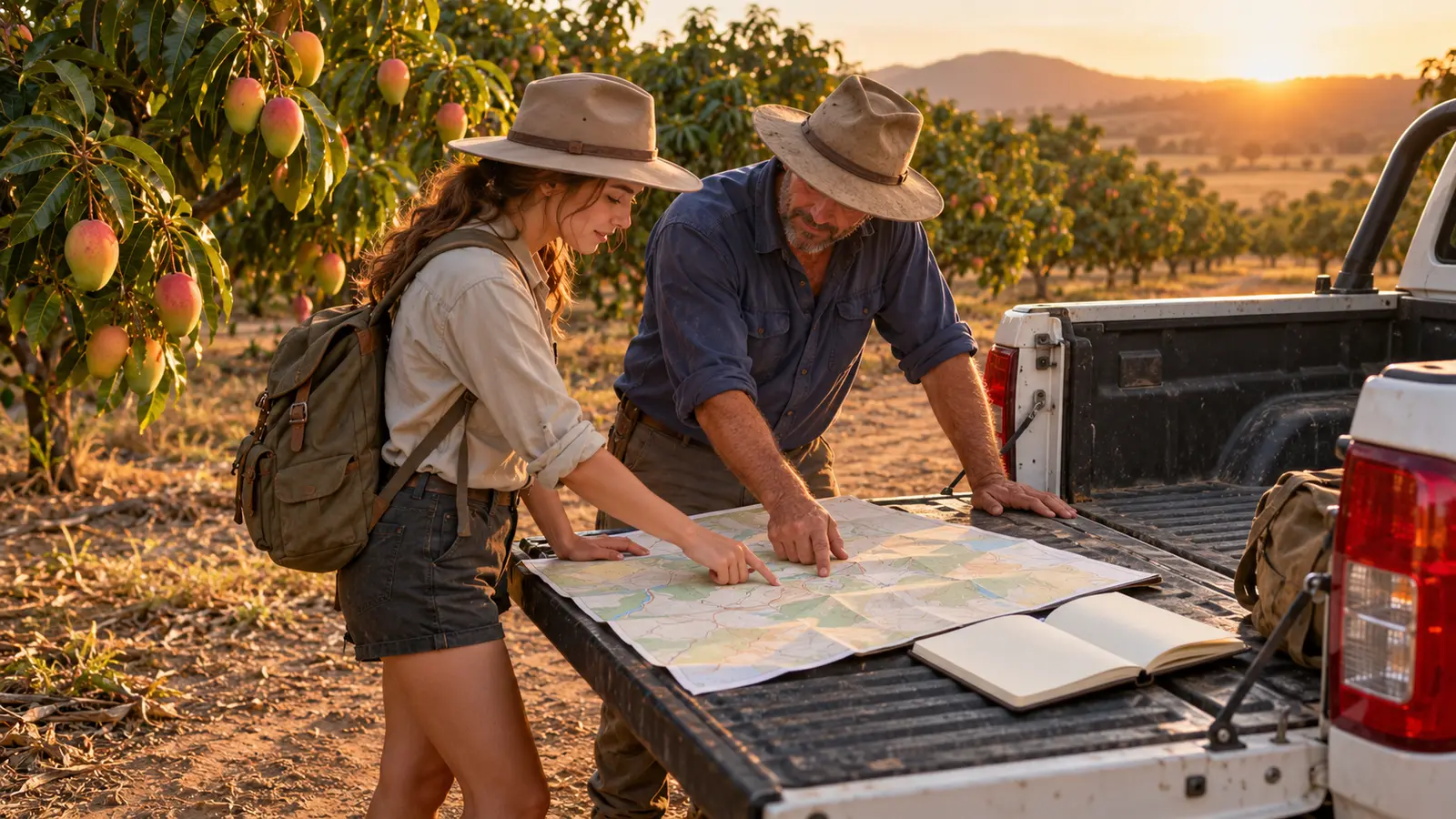
| Spring to early summer | Northern Territory mangoes, Darwin and Katherine regions | Usually harvested between September and December | Is the heat plan clear? Mango sap is caustic and can irritate skin, so ask what protective clothing is provided. |
| Summer | Tasmanian cherries, blueberries, raspberries and strawberries | Cherries December to February, blueberries and raspberries December to May, strawberries October to May | Which weeks does the grower expect to start, and is the start date in writing? |
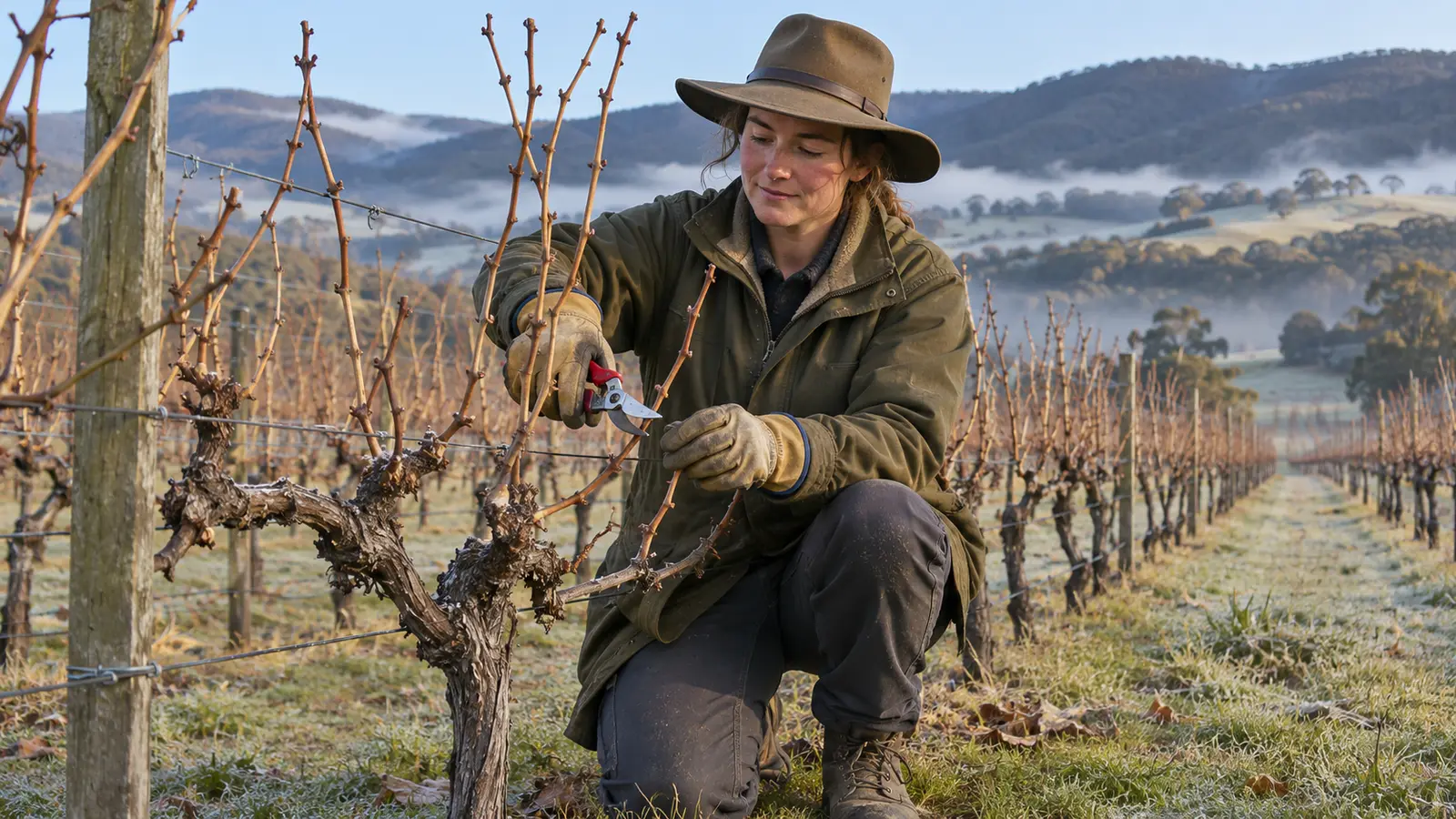
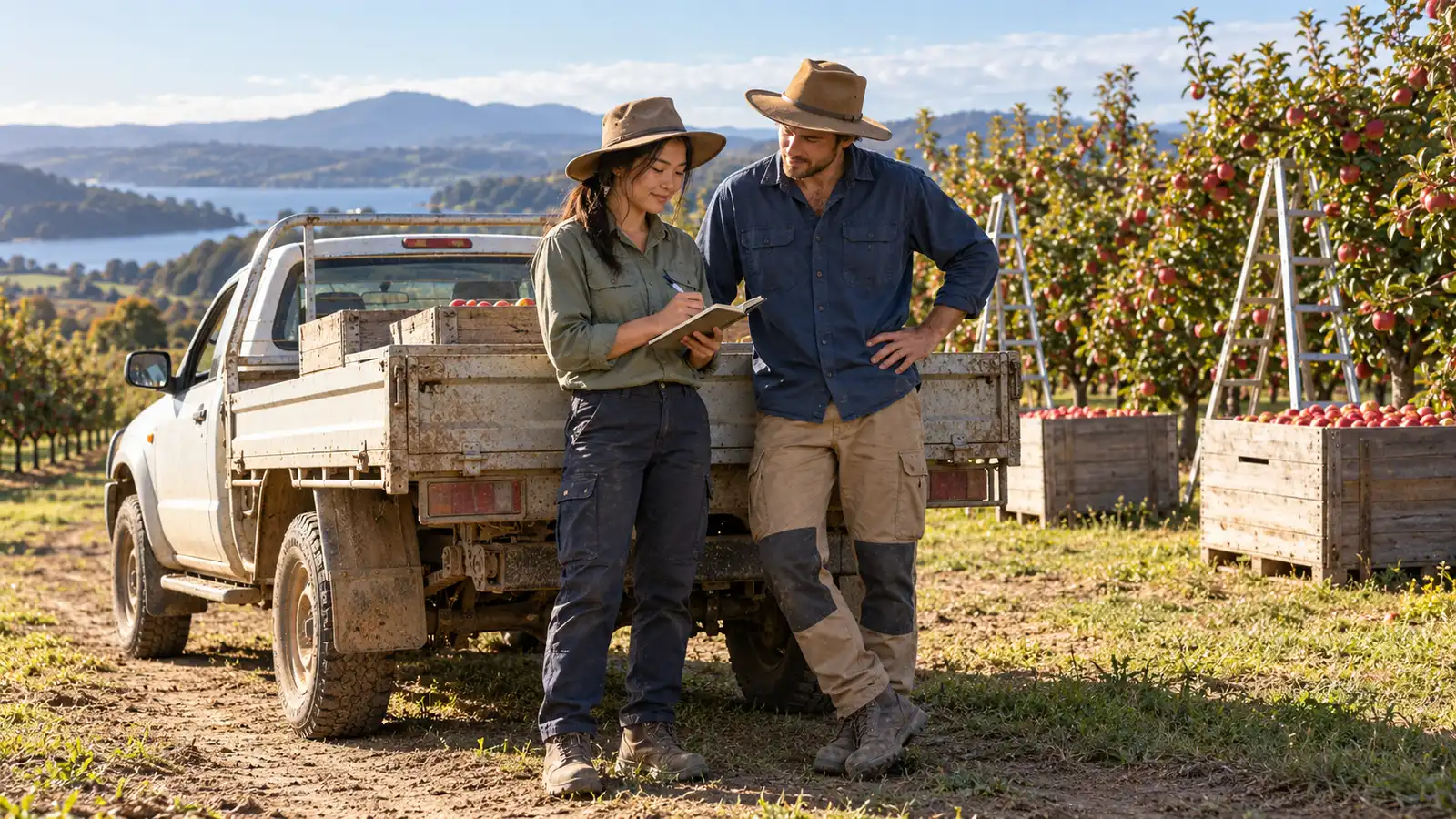
| Autumn | Tasmanian apples, pears, hops and wine grapes | Apples February to May, pears and hops February to March, wine grapes February to May | Is this a new employer or the summer one, and how long have you already worked there? |
| Colder months | South Australian citrus | Generally peaks in the colder months | Is the work picking or packing, and which postcode is the farm in? |
| Autumn to spring | Western Australia, Carnarvon district vegetables | Major growing season is autumn, winter and spring | Which award or state rules cover the business, and how will you reach the district? |
Notice what the sample does well. Tasmania's state agriculture department says the state has harvest jobs available for nearly 12 months of the year, so one anchor state can carry several months of work. That cuts the number of long drives, which is where routes lose money. The leg to Western Australia, by contrast, is a long connector, so it only makes sense with a confirmed offer.
The Tasmanian seasonal produce harvest dates and the Northern Territory mango page show what to look for: a government page that names the crop, the region and the months. Our state guides for the Northern Territory and Tasmania add how work is found in each place.
Make every leg count towards your visa
If you are on a Working Holiday visa (subclass 417) and want a second or third one, the route should also count as specified work. Home Affairs takes the 3 months needed for a second visa as a minimum of 88 calendar days, and the 6 months for a third as 179 calendar days. Check the rules for your own visa on the Home Affairs specified work page.
Four rules shape a route:
- The work can be split across employers and places, but it cannot be completed in a total period shorter than 3 or 6 calendar months.
- Work on one calendar day cannot count as more than one day, however many hours you work.
- Unpaid days when you did not work because of severe or seasonal weather do not count, and Home Affairs makes no exception for weather.
- Location matters. All postcodes in South Australia, Tasmania and the Northern Territory are regional Australia for specified work, so check the official postcode list before you count days elsewhere.
Home Affairs advises not leaving specified work until the end of your stay, to allow for bad weather, illness or not finding enough work. A route that puts the days early gives you time to recover from a bad leg. Our post on the records to keep from day one shows what to save at every stop.
Budget for travel days and the gap between crops
Travel days are not paid work, so they do not count towards your 88 days. The gap between the end of one crop and the start of the next is the same. Plan for both in time and money, because the cost sits between jobs, where there is no payslip.
Fair Work says workers have the right to choose where they live, even when an employer offers accommodation with a job, and should be wary of paying upfront for accommodation before they have found a job. Your buffer should cover a deposit or bond at the next stop, fuel or fares, and the weeks before the first pay. Our accommodation and transport guide goes through the options.
Keep your application ready so you can send it the day an employer replies. A short, accurate CV made with Build AI CV is enough for most farm and packing work. If you want to show earlier work to the next grower, Talent Tabloid lets you present a verified work history.
Build your route in six steps
- Pick the anchor. Choose the region on the calendar where you want to spend the most weeks, ideally one with several crops after each other.
- Work backwards. Decide when you need to be there, then count back the days you need to travel and the weeks you want to rest or look for the next job.
- Choose a fallback. Write down a second region that has work in the same months, in case the first falls through.
- Get the offer in writing. Ask for the business name and Australian Business Number (ABN), the start date and the pay basis, then check the business on the Australian Business Register, as Fair Work advises.
- Book the move last. Pay for the long drive or flight only after the offer is confirmed, and keep the message or email.
- Repeat from the first day. Start the search for the next leg while you are working, not on your last day.
Our search plan for finding farm work before you land has message wording you can adapt for step four.
Rules that change when you cross a border
Six months with one employer
Visa condition 8547 limits Working Holiday Makers to a maximum of 6 months of work with any one employer. From 1 January 2024, plant and animal cultivation anywhere in Australia is exempt, and Home Affairs says the exemptions apply until the Government makes further decisions. A worker can also work longer than 6 months for the same employer in different locations, as long as work in any one location does not exceed six months. Check the current wording before you plan a return to the same grower.
Pay and conditions
From 1 July 2026, the Horticulture Award minimum hourly rate for an adult level 1 employee picking, sorting or packing fruit and vegetables is $25.74 for full-time and part-time employees and $32.18 for casuals. Western Australia has a state award for fruit growing and packing that applies to businesses in its state system, so check which rules cover the business before you move there. Our guide to working in Western Australia explains what to look for.
Heat on long summer legs
There is no single maximum temperature at which workers must stop work; the business must eliminate or minimise heat risks so far as is reasonably practicable. If you move from a cool region to a hot one, you are not yet used to the heat, and workers who are not acclimatised are among those most at risk of heat-related illness.
Common mistakes on a harvest trail
- Driving first and asking later. Arriving in a town with no confirmed job is the most expensive mistake on any route.
- Treating the calendar as a promise. A calendar window is typical. A cold spring or a wet week can move it, so confirm the start with the employer.
- Taking a pick-up offer at an airport or bus depot. Fair Work advises avoiding arrangements with people who meet you at regional airports or bus depots promising picking work, accommodation and transport on arrival. Our post on farm work scams lists more red flags.
- Counting every week as specified work. Unpaid travel and weather days, and work outside the approved industries and areas, do not count.
- Leaving the visa days to the end. Put the work that counts early in the route, not at the end of your stay.
- Forgetting records. Payslips, dates and the farm's address are your proof, and a gap in them is hard to fix later.
Rules, pay rates and visa conditions can change. Check the official government website before you act.
Frequently asked questions
How long should I stay at each stop on a harvest trail?
Stay as long as the work keeps paying and your record shows regular days. Long stays reduce unpaid travel, but check the six-month limit with one employer and that the work is the kind that counts for your visa.
Can I repeat the same route every year?
Seasons usually follow a typical pattern, so many people return to the same regions. Treat last year as a guide only, because timing moves with the weather, and confirm each start date with the employer.
Do travel days count towards my 88 days?
No. Specified work must be paid work in an approved industry and area, and travel days are not work. Only days you actually worked, or paid public holidays and sick days, can count.
How much money should I keep as a buffer?
There is no official figure for a route buffer, so base it on your own costs. Add up the next deposit or bond, the move and your first weeks of living costs before pay, then keep that amount aside before you leave a paid job.
Is it safe to accept a job before I arrive?
It can be, if you check the business name and ABN, get the offer in writing and never pay to get the job. An employer cannot ask an applicant to pay money to receive a job offer.
Key takeaways
- Choose the anchor region and the order of legs before choosing individual farms.
- Use the calendar for typical seasons, then confirm the real start date with the employer.
- Travel days and gaps between crops are unpaid and do not count towards your 88 days.
- Get every offer in writing and check the business before you book a long move.
- Keep payslips and dates from every stop so the days can be shown later.