November harvest jobs in Australia typically mean mangoes in the Northern Territory, strawberries and vegetables in Tasmania, and the run-up to Tasmanian cherries and berries in December. The useful move in November is not just finding a job this week. It is lining up the next crop while you are still earning on this one.
If mangoes are the crop you are chasing, our guide to mango picking jobs, sap burns and mango season pay covers the skin, heat and pay questions to ask before you start.
This is a follow-on to our October harvest plan, so it does not repeat the basics. Use it with the seasonal work calendar, which shows typical windows by month and state. Those windows are typical seasons, not live vacancy counts or a forecast of this year's crop.
What November harvest jobs typically look like
The windows below come from state and territory government pages, so they are cautious on purpose. Where an official page does not give a harvest window, we leave it out rather than guess. For other states, check the calendar and your state agriculture department.
| Place | Work | Typical window | What it means in November |
|---|---|---|---|
| Northern Territory (Darwin, Katherine) | Mango harvest | September to December | Usually still running, then ending in December |
| Tasmania | Strawberries | October to May | Underway, a long season |
| Tasmania (north and north-west) | Broccoli | November to June | Starting |
| Tasmania (north-west and south) | Hop stringing and training | June to November | Winding down |
| Tasmania | Cherries | December to February | Next month, so apply now |
| Tasmania | Blueberries and raspberries | December to May | Next month, so apply now |
The Tasmanian Department of Natural Resources and Environment says the state has harvest jobs available for nearly 12 months of the year, and publishes its seasonal produce harvest dates by region.
Mango work in the north: heat and sap
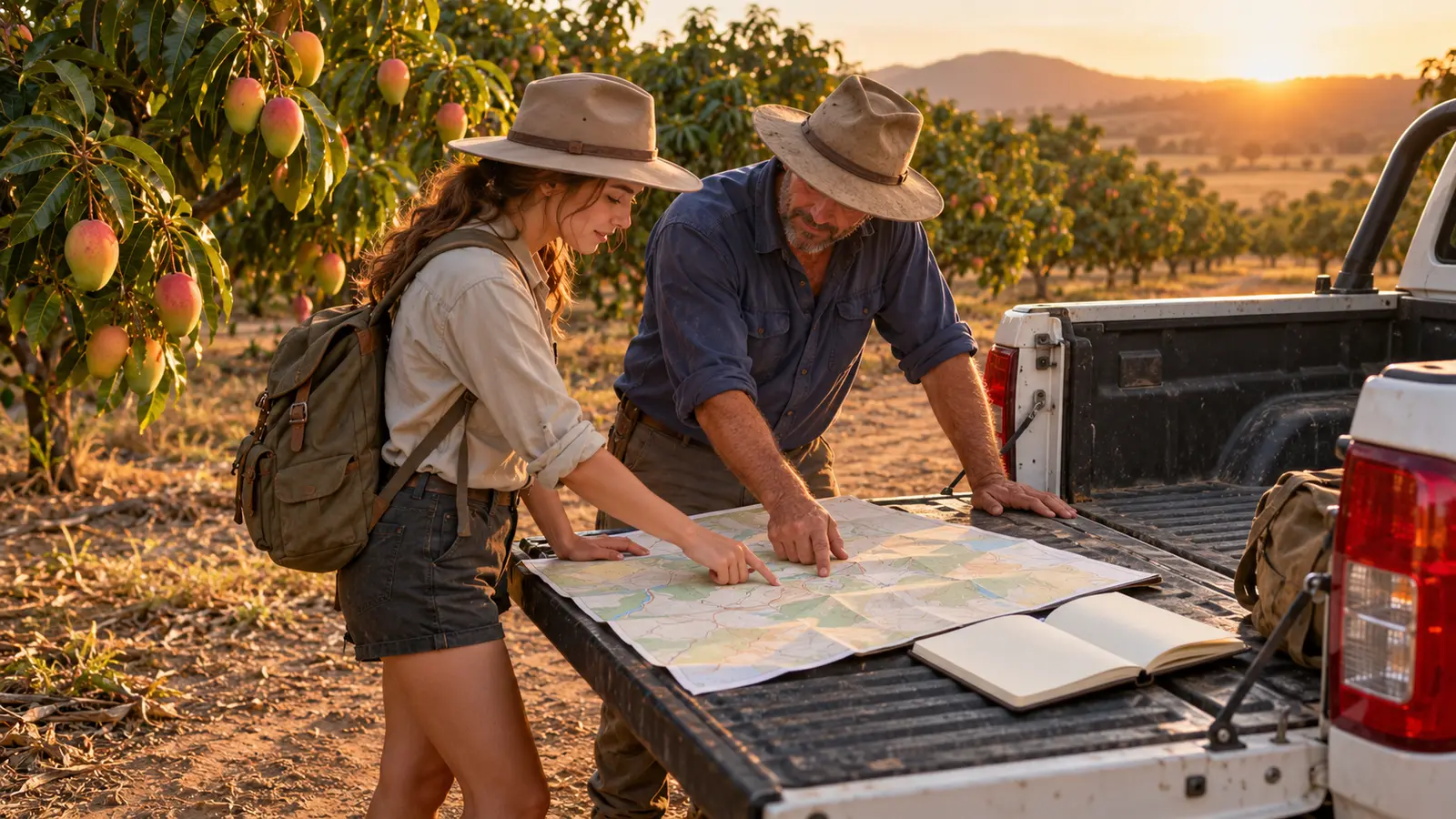
In the Northern Territory, mangoes are grown in the Darwin and Katherine regions and are usually harvested between September and December, according to the NT Government. By November the season is typically in its second half, so a late start can still work, but it will be short. Our Northern Territory work guide covers the region in more detail.
Two things catch newcomers out. The NT Government warns that mango sap is caustic and can irritate the skin, which is different from a mango allergy. Ask what protective clothing and washing facilities the farm provides.
The other is heat. Safe Work Australia says there is no single maximum temperature at which workers must stop work; businesses must eliminate or minimise heat risks so far as is reasonably practicable. Symptoms of heat-related illness may include dizziness, sweating, visual disturbances, fainting, nausea and muscle cramps. Read our summer-shift plan before your first hot day.
Tasmania: the crops either side of the cherry start
Tasmania is where November looks like a bridge. Strawberries are in season from October to May, broccoli starts in November in the north and north-west, and cherries, blueberries and raspberries all start in December. A worker who is already on strawberries in November is in a good spot to move across when the cherry orchards begin hiring. Our cherry harvest plan shows how to search by region, and the Tasmania work guide covers the state itself.
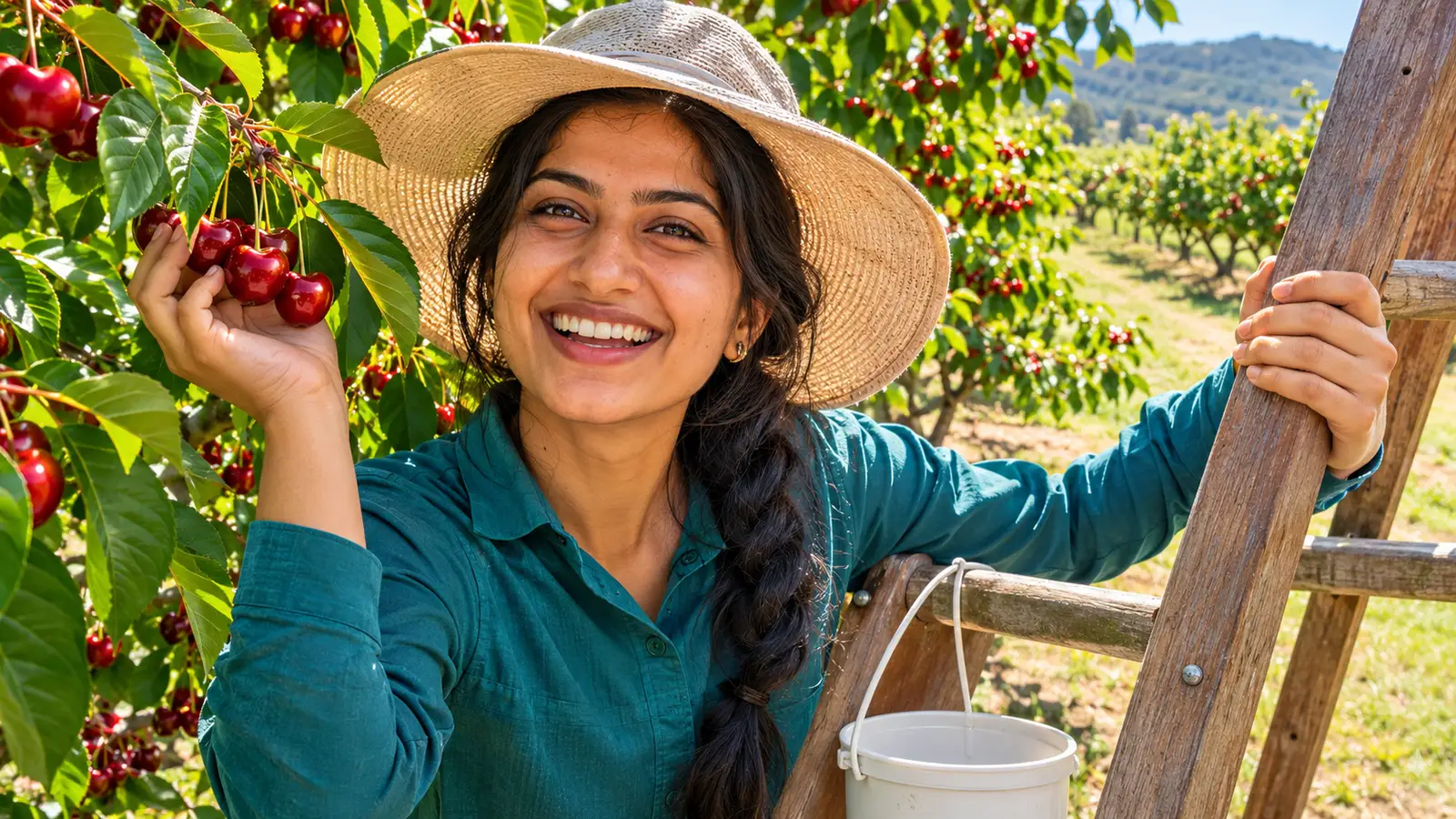
If you are choosing between crops, remember that strawberry picking is low, repetitive work and cherry picking is ladder and tree work. Ask which one you are being offered, because the pace, the pay type and the physical load differ.
Line up December while you are still in the November job
Most gaps between crops come from waiting until a job ends before searching. A simple order of work avoids that.
- Write down your finish date at your current job and the date you want to start the next one.
- Pick the next crop from the table above or the calendar, and check the official page for its region.
- Update your CV with real dates, tasks and your availability. Build AI CV can help you build a one-page version for farm work.
- Message or call growers about December, and ask for the start date, hours, pay type, and accommodation or transport arrangements in writing.
- Do not leave your current job until you have a confirmed start date, and do not pay anyone for a job offer.
If you are on a working holiday visa, Home Affairs recommends waiting until the visa is granted before booking flights or making travel, work or study commitments. That applies to a first visa, not to travel around Australia once you hold it.
Pay checks for a November start
From 1 July 2026, the Horticulture Award minimum hourly rate for an adult level 1 employee picking, sorting or packing fruit and vegetables is $25.74 for full-time and part-time employees and $32.18 for casuals, according to Fair Work. Many pickers are paid by output instead. Fair Work's example is that a level 1 full-time or part-time pieceworker working 7.6 hours must get at least $195.62 for the day.
Before piecework starts, the employer must give you a written piecework record, signed by the employer, with the start date and time, the task, the piece rate, your hourly rate and the award's minimum wage guarantee statement. If a piece rate changes, you must get a new record first. Our hourly versus piece rate post walks through a slow first day.
Keep your 88 days moving
For a second Working Holiday visa you need at least 3 months of specified work, which Home Affairs takes as a minimum period of 88 calendar days, including weekends or equivalent rest days. It does not have to be done all in one go or with one employer, but it cannot be completed in a total period shorter than 3 months. Work on one calendar day cannot count as more than one day of specified work.
Picking fruit on an orchard is an example of eligible plant and animal cultivation, but the industry and the postcode must both qualify, so check the Home Affairs specified work page first. Our 88 days guide and post on counting days when rain and short weeks get in the way show how to keep your own record. Fair Work's Record My Hours app lets you keep a record of hours, where you worked and the type of work.
Common mistakes in November
- Waiting for a job to finish before searching. The gap between crops is where weeks are lost.
- Treating the calendar as a vacancy list. It shows typical windows only.
- Arriving at the end of a season. A late start in a mango region may give you only a short stretch of work.
- Ignoring heat and sap. Ask about shade, water, breaks and protective clothing before you start.
- Not asking for the piecework record. If you are paid by the bin, it must be in writing before you start.
- Paying for a job offer. Employers cannot ask job applicants to pay money to receive a job offer.
Frequently asked questions
Can I start picking in November and still count it towards 88 days?
Yes, if the work is specified work in an eligible industry and postcode. Home Affairs takes 3 months of specified work as a minimum of 88 calendar days, so a November start simply uses up part of that count. Check the industry and postcode before you accept the job.
Are mango picking jobs only in the Northern Territory?
No. The NT Government says its mangoes, grown around Darwin and Katherine, are usually harvested between September and December. Other regions also grow mangoes, and the Carnarvon district in Western Australia lists them among its crops, but this post only gives timing that an official page confirms.
When do Tasmanian cherries start?
The Tasmanian Government lists cherries from December to February, so November is the month to line up work rather than start it. Exact timing moves with the weather and the orchard, so confirm a start date with the grower before you travel.
Is a November job on the harvest calendar a promise of work?
No. The site calendar shows typical regional windows by month and state, and says they are typical seasons, not live vacancy counts or a forecast of this year's crop. Treat it as a planning tool and always confirm a start date, pay and hours in writing before you drive anywhere.
What should I check in my first payslip?
Check the pay period, your hourly rate and hours, any loadings, each deduction and the super contributions. If you are paid by the bin or kilo, compare it with your written piecework record. Fair Work can help if the numbers do not match.
Rules, pay rates and visa conditions can change. Check the official government website before you act.
Key takeaways
- November typically sits between crops: mangoes in the NT are usually still running, and Tasmanian cherries and berries start in December.
- Use official harvest dates for planning, and confirm every start date with the grower in writing.
- Start your December search while you are still in your November job.
- Ask about heat, sap and pay type before you accept work.
- Specified work for a second visa needs the right industry, the right postcode and 88 calendar days.